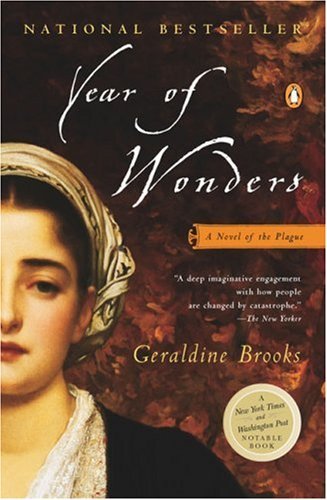
 In Year of Wonders, Geraldine Brooks describes the far-reaching effects of bubonic plague on a small English village in the year 1666. Anna Frith, an 18-year-old widow, is the narrator of this sad tale. Needing to earn extra funds to provide for her young sons after the death of her husband, Anna takes in a boarder, a tailor who unknowingly carries the plague in the bolts of cloth he works with. On his deathbed, the tailor warns Anna to burn everything he brought with him, now perceiving the cloth to be the culprit of his illness. Anna, though, allows the villagers to take the items the tailor had worked on, feeling she has no right to withhold them from those who had already paid for his labors. This decision would play a part in deaths of two-thirds of the villagers.
The horrors depicted in Year of Wonders held my attention. I found myself appreciative that I haven't had to witness such suffering and affliction. And I thought a lot about not only how terrible the plague must have been, but how difficult everyday life itself must have already been, without adding the plague to the mix. The story is a compelling one, and Anna lends a courageous voice to it. In brushing aside her own grief, she helped others who had nowhere to turn and no one to turn to. And the year of plague became a year of wonders for her, as she grew in strength and knowledge.
3.5/5

No comments:
Post a Comment